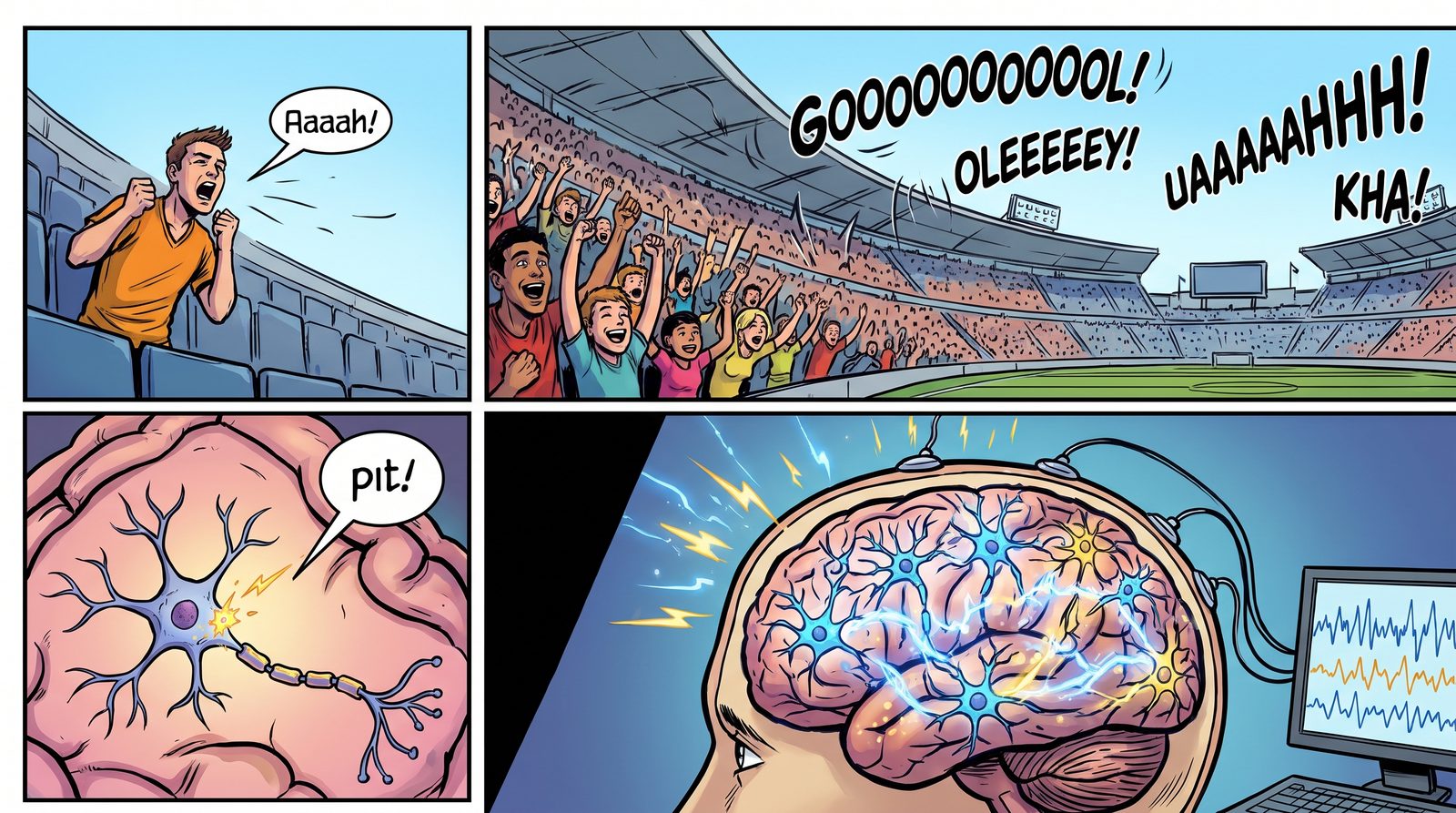
Our brains hold around 86 billion neurons. Imagine standing outside a football stadium. There are tens of thousands of people inside. You can’t make out what any one person is saying. But when a goal goes in, or a whole stand starts chanting at once, you hear a clear roar even from the street.
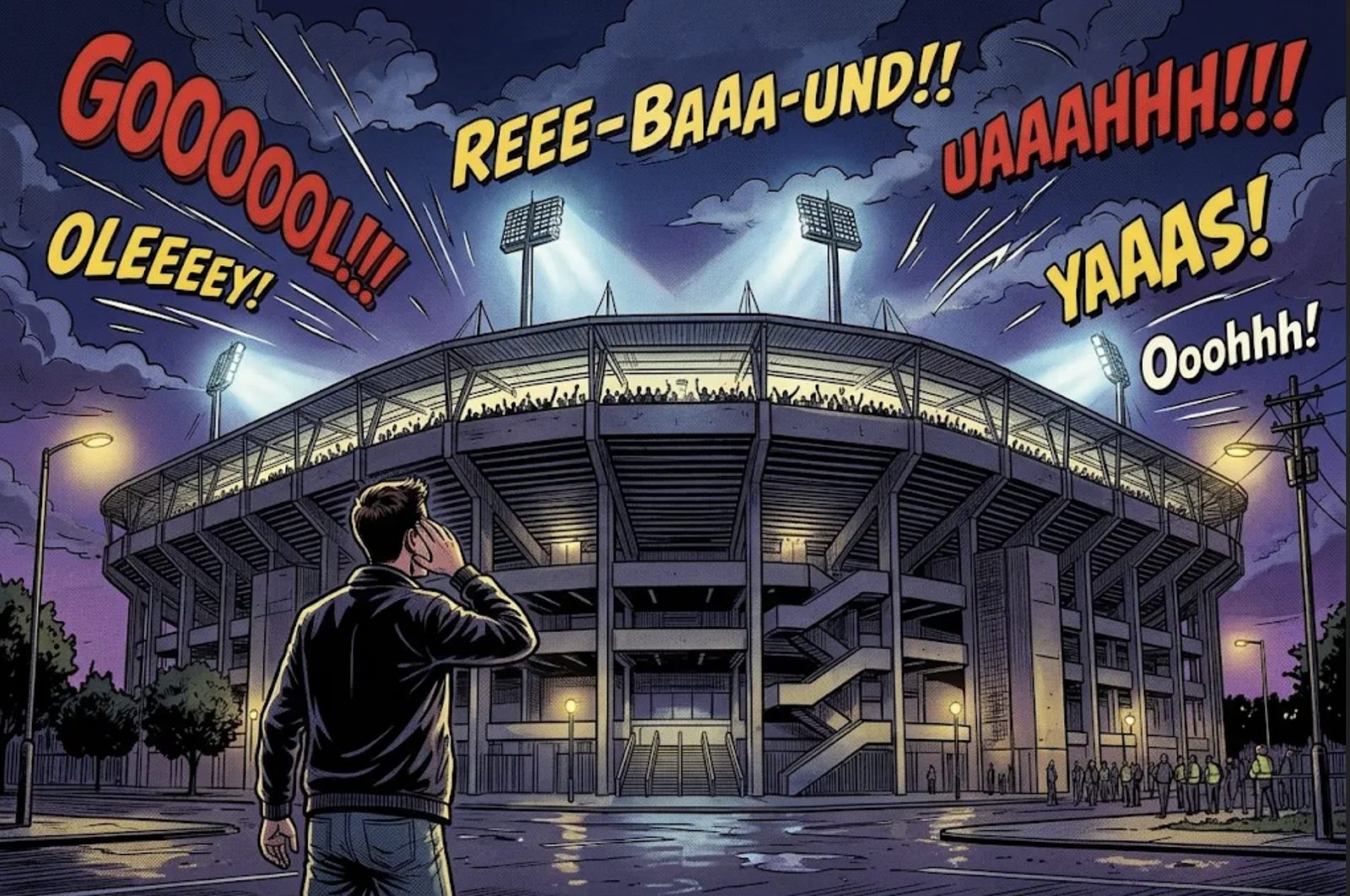
EEG works exactly like that. Neurons in the brain talk to each other with tiny electrical signals. A single neuron’s signal is far too weak to measure from outside the skull. But when thousands of neurons fire together, in the same rhythm, the combined signal reaches the electrodes we place on the scalp. The waves we see in EEG are the brain’s “collective chants”.
Rhythms
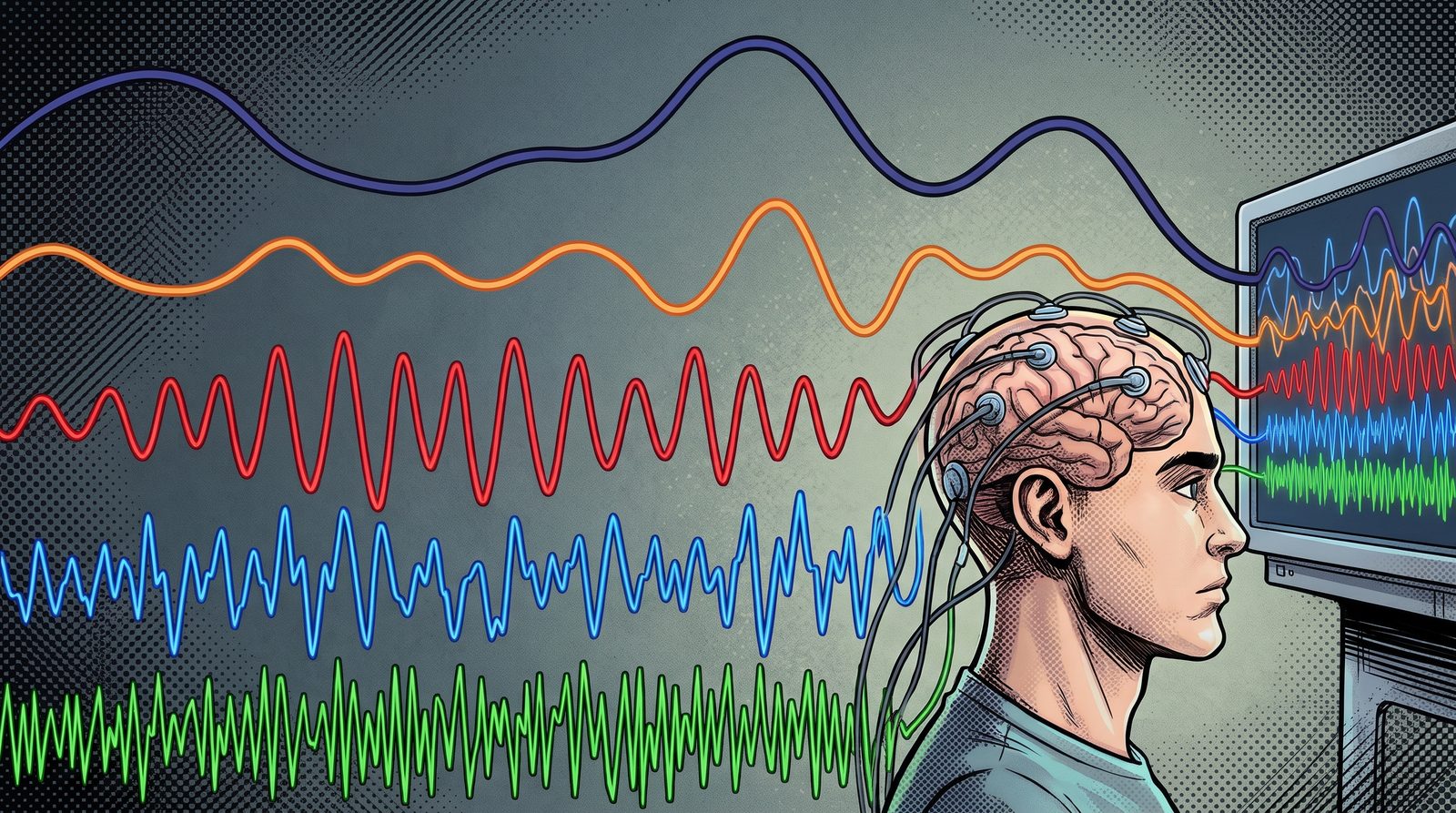
This collective activity tends to oscillate at certain speeds. We call them frequency bands:
- Delta (0.5–4 Hz): the slow waves of deep sleep.
- Theta (4–8 Hz): drifting off, daydreaming, some memory processes.
- Alpha (8–13 Hz): grows when you close your eyes and relax. It’s the easiest rhythm to see.
- Beta (13–30 Hz): awake, focused, thinking.
- Gamma (30 Hz and above): linked to intense moments when information is being pulled together.
These aren’t “states” with sharp borders. The brain produces a mix of these rhythms all the time, and we look at which ones dominate and by how much.
Strengths And Weaknesses
EEG’s biggest strength is speed. It captures the brain’s response to a stimulus at the millisecond scale. We can measure the gap between the moment you see a logo and the moment your brain reacts to it.
Its weakness is location. Back to the stadium: you can roughly tell which stand the roar comes from, but not which seat. Pinpointing what happens deep inside the brain takes other methods, such as fMRI.
Fast, portable, relatively cheap and completely harmless, EEG is ideal for studying everyday decisions.
References
- Azevedo, F. A. C. et al. (2009). Equal numbers of neuronal and nonneuronal cells make the human brain an isometrically scaled-up primate brain. Journal of Comparative Neurology, 513(5), 532–541. DOI: 10.1002/cne.21974