There are two bottles of juice on the supermarket shelf. One label says “natural preservative”, the other names a chemical preservative. The ingredients are almost identical. Would they taste the same to you?
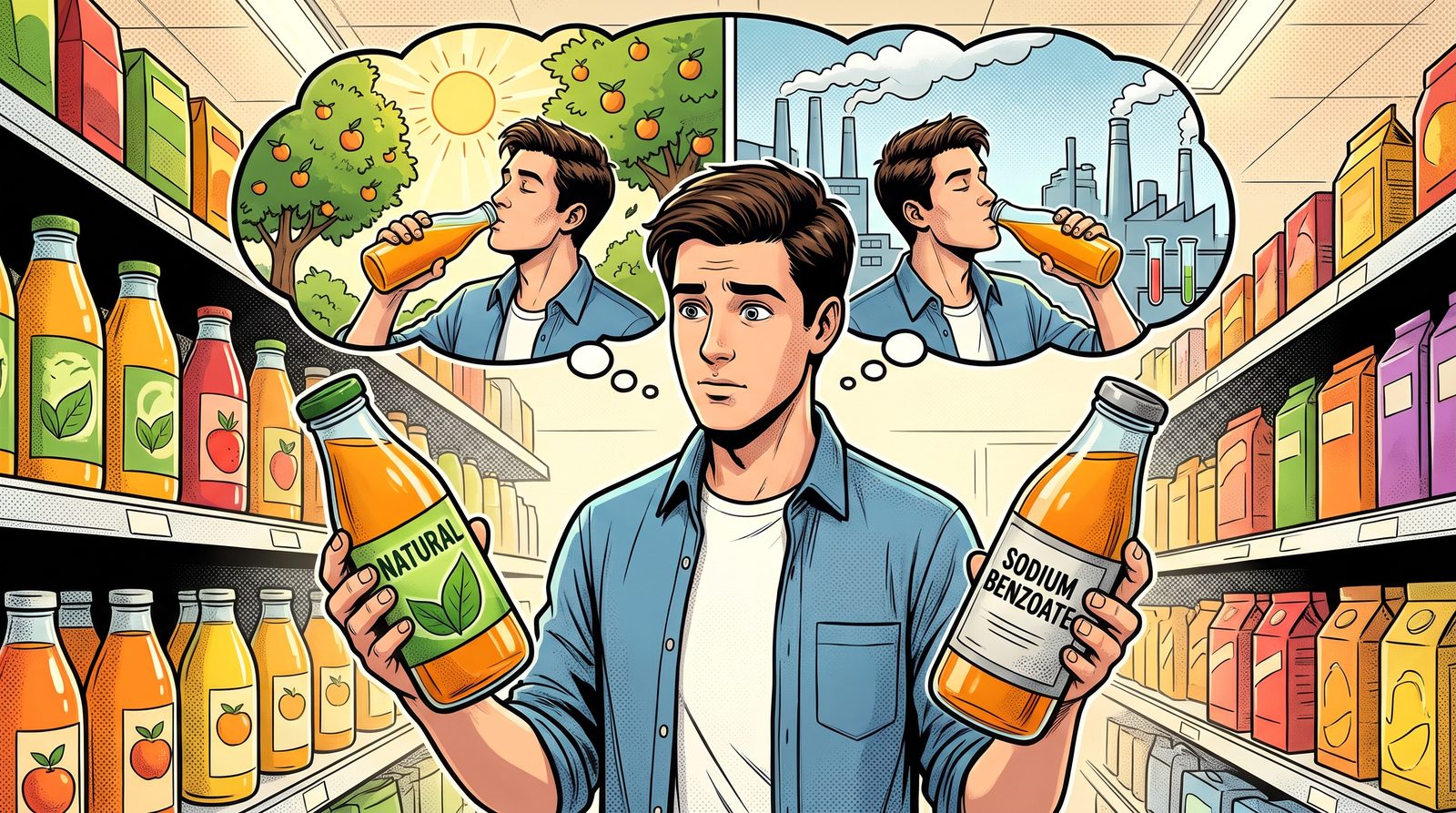
Most of us would say “of course”. But taste doesn’t only happen on the tongue. What we think we’re eating or drinking also shapes how it tastes. That’s exactly what we wanted to find out in this study.
What Did We Do?
Participants tasted drinks containing different preservatives, and we varied the information they were given about the drinks beforehand. After each tasting, participants rated the drink. Meanwhile, we recorded their EEG with a 32-channel, water-based electrode headset.
That let us see two things side by side: what participants said, and what their brains did.
What Did We Find?
Both the type of preservative and the information given beforehand affected how participants rated the taste. In other words, knowing what was on the label changed how the drink was perceived.
On the EEG side, we saw two clear differences between the moments participants liked and disliked a drink: in gamma activity over the forehead, and in beta activity over the upper back of the head. We explained what these rhythms are in our EEG post.
Why Does It Matter?
Food labels don’t just inform; they shape the experience. Being able to show this with brain signals, alongside survey answers, helps us better understand what consumers mean when they say “I like it” or “I don’t”.
We presented the study at the 12th IEEE CoDIT conference in Bari, Italy, in July 2026. You’ll find the full reference on our publications page.
References
- Tunakan, B. İ., Akan, A., Taskin, Y., Turhan, K. N. (2026). Analysis of Human Emotions for Different Taste Stimuli Using EEG Signals. IEEE CoDIT. DOI: 10.1109/codit70676.2026.11630919